The hardest transitions in the education system are: P4 -> P5, Sec 2 -> Sec 3, Sec 4 -> JC. Since WA1 is coming for most schools (Feb - Mar), I’ll discuss about the challenges of transitioning from Sec 2 to Sec 3 which I often observe in my students.
Is the transition from Sec 2 really difficult?
Your teenager may or may not have realised it yet, but the level of depth pertaining to the syllabus has increased substantially.
In the Singapore system, Secondary 3 is a specialist year. We move away from the generalist approach of Lower Secondary and dive into the deep end of academic rigor.
1. The Content Explosion
In Lower Secondary, Science was a single subject. In Sec 3, for those taking Pure Sciences, it suddenly becomes distinct, heavy-duty disciplines. Each has its own “language,” its own practical lab requirements, and its own logic. For those taking combined science, the depth of each science is still significantly greater than that of lower secondary.
The Observation: Many students try to use their Sec 2 “cramming” habits. But the sheer volume of Sec 3 content makes cramming physically impossible. If they don’t shift to a consistent weekly review, the “content snowball” will catch up by the Mid-Years.
What can be done: Start with the end in mind. Remember that we are studying towards O-Levels or N-Levels.
For a start, homework serves as a good, mandatory checkpoint to ensure one is keeping up with the content taught. However, homework is not enough. Typical homework questions often lack the potential depth that exams can test. Homework questions test the “remembering” level of Bloom’s Taxonomy , but exam questions often test the “Understanding” Level.
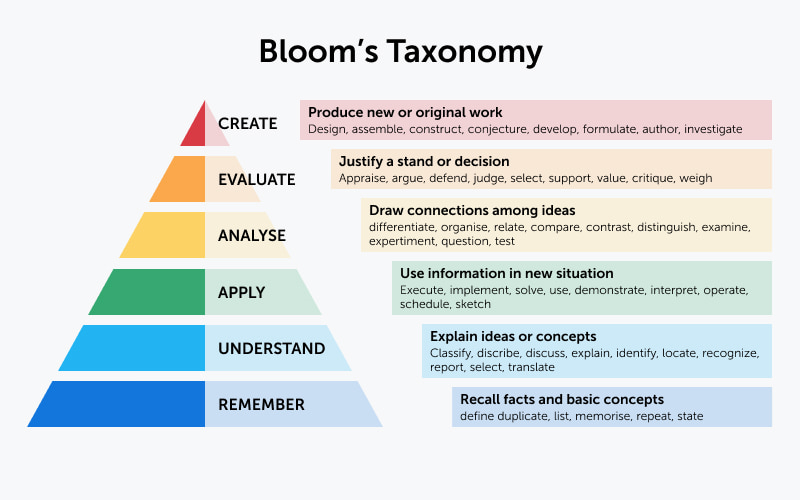
This is a traditional take, but assessment books , free test papers and requested for extra questions from teachers is a good way to immediately get exposure to higher order thinking questions.
2. The A-Math Paradox: Rewiring the Brain for the Students taking A-Math
Additional Mathematics (A-Math) is often the biggest shock to the system. Unlike E-Math, which is grounded in everyday logic, A-Math is abstract. It requires students to manipulate variables and prove identities that aren’t immediately “visible.”
- The Observation: I’ve observed that many students fail A-Math in WA1 not because they lack talent, but because their “mathematical stamina” is low. They give up after three lines of working. Sec 3 is about building the grit to solve a 12-line working without losing a negative sign, while still remembering the problem they’re acutally trying to solve.
What can be done: Mathematical stamina comes with proper practice. Practice doing multiple questions from start to finish, dealing with the discomfort of not knowing the correct answer yet till the end. Caveat: However, this is especially difficult with our short attentions spans today. The simple act of putting one’s device away while attemping a series of questions for an hour might make a bigger impact than you image. Read more about phones and digital distractions here
3. The Increase in Memory Requirements
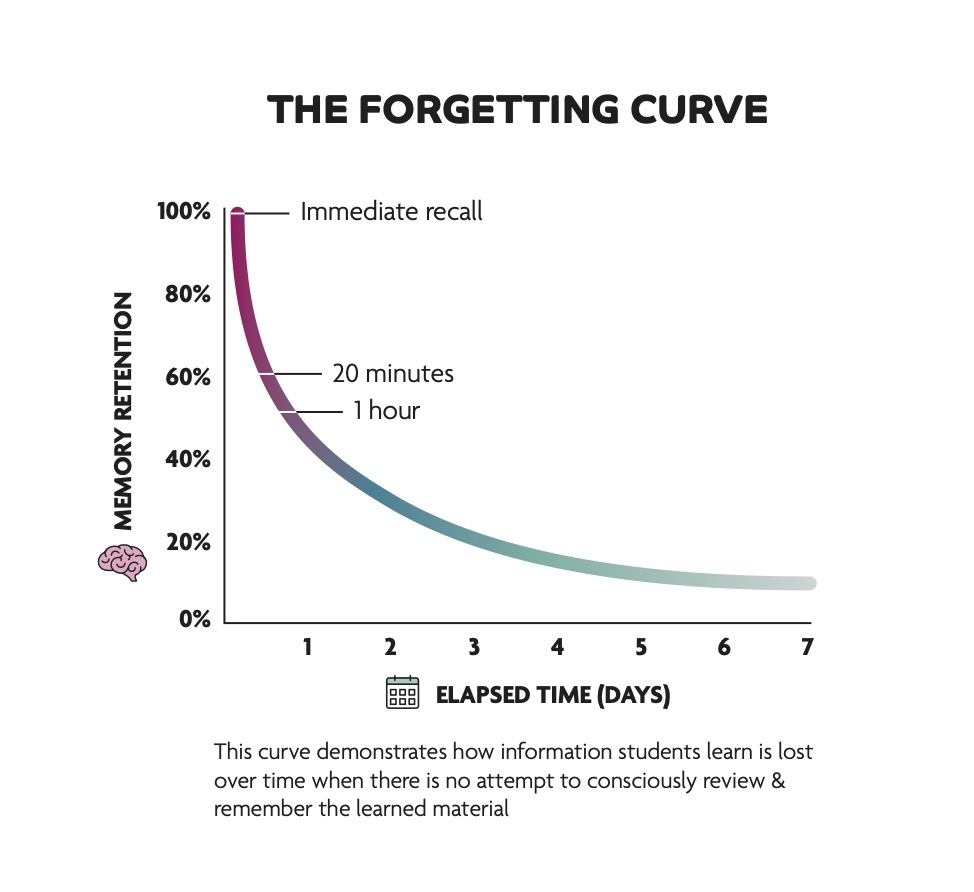
Sec 3 is the year where humanities become a different ball game. Taking humanities means memorising volumes of information, and this is even more challenging for pure humanities. The issue with memorising so much information is that last minute studying does not work for everyone anymore (except for those with photographic memory). Before, we tend to forget what we read within 24hours. Now, with our shortened atention spans, we tend to forget what we read almost immediately. This is where we can utilise proper study techniques and working with the forgetting curve to combat. I wrote on how to stop forgeeting what you learn.
4. The “Maturity Gap” and Executive Function
Research in adolescent brain development suggests that the “Executive Function” (the ability to plan, prioritize, and organize) is still under construction at age 15.
In Sec 3, students are juggling 7 to 9 subjects, CCA leadership roles, and a more complex social life. Often, the “dip” in grades is actually a management failure, not a brain failure. They are simply overwhelmed by the logistics of being a specialist.
5. How to Support Your Teen
- Normalize Poor Performance : Tell them, “I expected this. Sec 3 is a different beast.” Taking the shame out of the grade is the fastest way to get them back to work.
- The “Slicing” Method: Help them break down their revision. Instead of “studying Physics,” aim to master “Kinematics graphs” for 40 minutes. Small wins build the momentum needed for the O-Level Journey. It’s a marathon, not a series of sprints.
- Focus on Technique, Not Marks: Look at mistakes in their work so far. Did they lose marks because they didn’t know the fact, or because they didn’t “link” the answer to the question? In Sec 3, application is king.
The Bottom Line
Secondary 3 WA1 is a compass, not a verdict. It tells us where the gaps are before they become “black holes.” Use this term to help your child find their rhythm, refine their note-taking, and—most importantly—keep their confidence intact.